
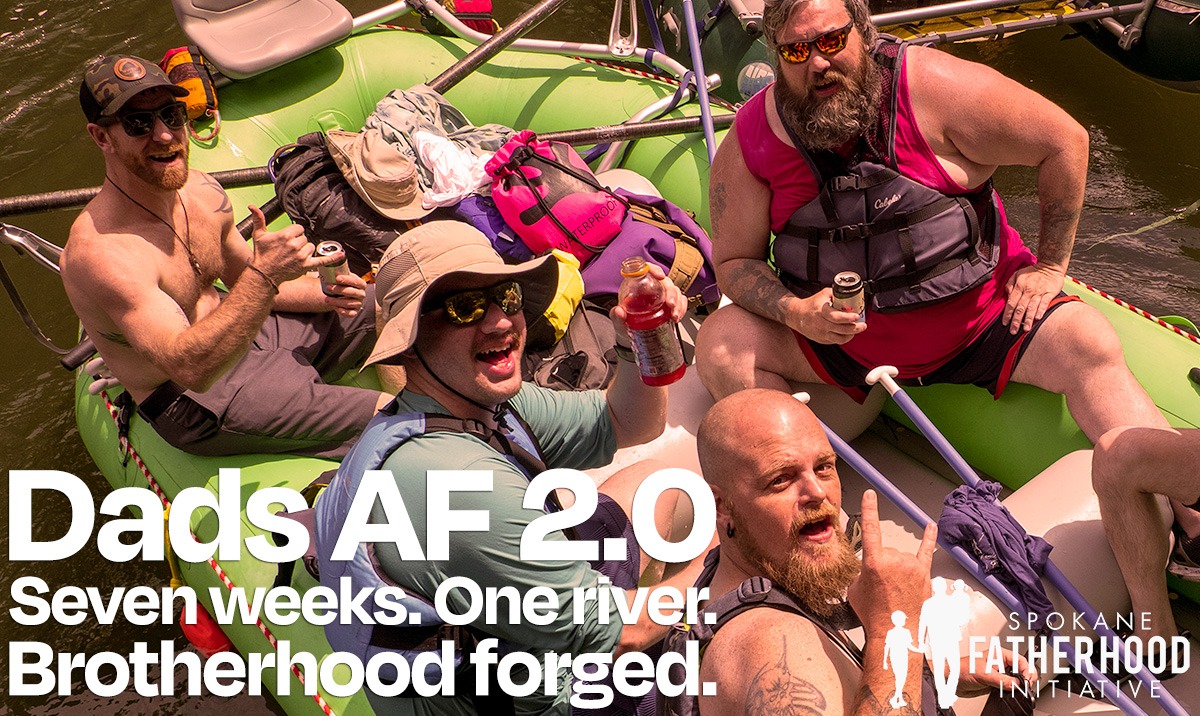

If you're enrolled in or graduated from Dad2Dad and wonder "what's next," this is your answer.
Dads About Fitness is returning for its sophomore run beginning Wednesday, March 18, 2026 — and we’ve rebuilt it from the ground up. Same brotherhood. Same capstone adventure on the river.
The curriculum has been completely overhauled, drawing from more than 100 research-backed sources — including Andrew Huberman, Peter Attia, James Clear, Robert Greene, and Robert Waldinger’s landmark Harvard research — and organized around six pillars of human performance that are going to challenge you in ways you didn’t expect.
This isn’t a gym class. It’s not a diet plan. It’s seven weeks of becoming the man your family — and your community — actually needs you to be.
What we learned from the first run
The original Dads AF cohort showed us something powerful. When dads who’ve already done the emotional work of fatherhood training start investing in their physical and mental wellbeing together, the results compound. They showed up for each other. They showed up differently at home. And they showed up for the community — organizing the 2024 Father’s Day Celebration and serving as living proof that changed dads change everything.
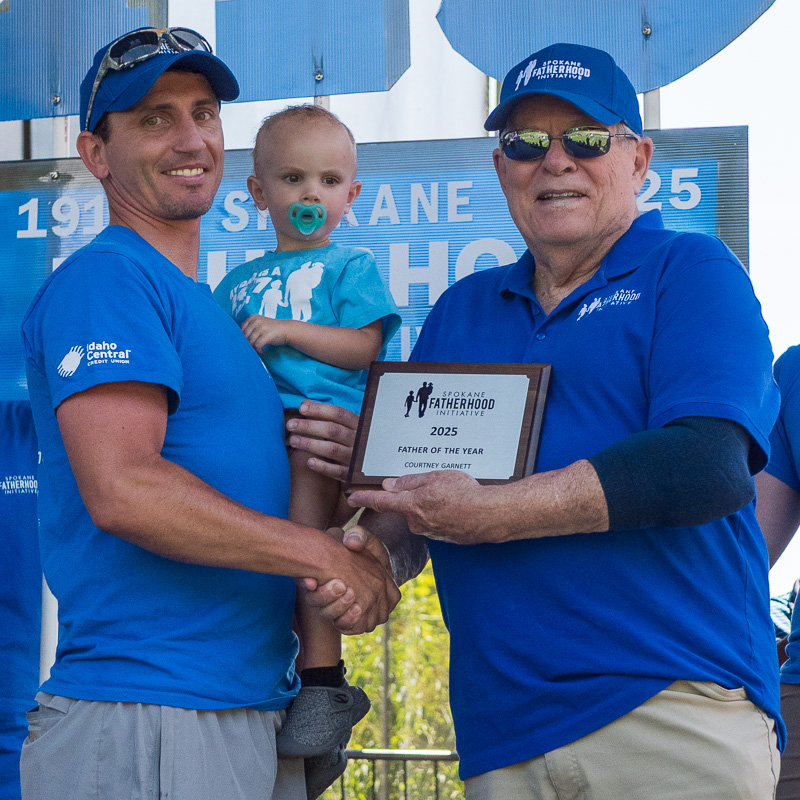
That service instinct wasn’t incidental. It was one of the most meaningful parts of the program, and this time we’re building it in intentionally. More on that below.
The six pillars of Dads AF 2.0
Session zero lays the biological foundation. Then each of the six weeks is dedicated to one pillar. They build on each other — you'll feel the progression as the weeks move forward.
Foundations of human performance and purpose
Select a pillar to explore the concepts within it.
1 Finding unique purpose
► The mastery process
- Internal radar
- Archaeology of childhood
- Impulse voices
- Life’s task
► Five frames of mind
- Builder
- Connector
- Protector
- Teacher
- Pursuer
2 Physical health & longevity
► Exercise protocols
- Zone 2 cardiovascular
- High intensity interval training
- Resistance training
- Time under tension
► Key health markers
- VO2 max
- Grip strength
- Waist-to-height ratio
- Dead hang time
3 Neuroscience of habits
► The four laws
- Make it obvious
- Make it attractive
- Make it easy
- Make it satisfying
► Identity & belief
- Casting votes for identity
- Learning new behaviors
- Public performance risk
4 Mental & behavioral optimization
► Dopamine dynamics
- Baseline vs. peaks
- Dopamine trough recovery
- Addiction narrowing
► Willpower seat
- Anterior midcingulate cortex
- Embracing friction
- Will to live
► Meditation & mindfulness
- Interoception vs. exteroception
- Default mode network
- Non-sleep deep rest (NSDR)
5 Nutritional & gut health
► Microbiome support
- Fermented foods
- High fiber intake
- Avoiding ultra-processed foods
► Foundational nutrition
- 80/20 plant-based diet
- NOVA classification
- Hydration & electrolytes
6 Social & emotional well-being
► Relationships
- Social connection value
- Non-verbal communication
- Relational accountability
► Healthy masculinity
- The Great Morani analogy
- Fatherhood training
- Responsibility vs. shame
Session 0: Foundations night (March 18)
Before we build anything, we tune the instrument. Session 0 is the night everyone shows up, gets their bearings, and takes stock of where they actually are. Most men trying to become better fathers are doing it while running on a depleted system: sleep debt, chronic dehydration, sedentary patterns, and food that’s quietly undermining their mood and patience. We name that honestly on night one.
We cover the four foundations — hydration, sleep, movement, and basic nutrition — not as a lecture but as a baseline check. Every man completes a simple self-assessment and leaves with one specific commitment for the week ahead. Then we walk through the seven-week arc, set expectations, and establish what brotherhood in this cohort is going to look like. This is also when the “name and one word” opening ritual begins — a practice that carries through every session.
Week 1: Finding your unique purpose
We start here because everything else depends on it. Using frameworks drawn from Robert Greene’s Mastery and a tool called the Five Frames of Mind, you’ll trace the thread back to what you were wired for — what lit you up before the world told you who to be. Your frame might be the Builder, the Connector, the Pursuer. Knowing it changes how you show up as a father, not as an obligation but as your actual self. This is one of the most grounding exercises a man can do, and it sets the arc for the entire six weeks.
Week 2: Physical health and longevity
Here’s a number most men haven’t sat with: on average, men die five years earlier than women — and spend more of their final years in poor health. That’s not fate. It’s largely behavioral. Week two opens with that honest conversation, then gets concrete and measurable. We’ll establish your personal baseline across five biomarkers that research — especially from Andrew Huberman and Peter Attia’s Outlive — consistently link to how long and how well you live: grip strength, dead hang time, VO2 max, bodyweight benchmarks, and waist-to-height ratio. You’ll leave with a movement protocol built around Zone 2 cardio, resistance training, and time under tension — designed to fit a real dad’s real schedule.
Week 3: Neuroscience of habits
This is where behavior change science meets identity. Drawing from James Clear’s Atomic Habits, BJ Fogg’s research on tiny behaviors, and current neuroscience on how new patterns actually take root, we’ll audit the habits already running your life — and rebuild from identity up.
The core insight: every healthy choice you make is a vote for the man you’re becoming. That framing changes everything — especially for men who’ve already started redefining their identity in Dad2Dad.
Week 4: Mental and behavioral optimization
This is the deepest week — and by design, it uses a flipped classroom format. You’ll get primed with short content pieces throughout the week before you arrive, so the Wednesday session is integration and practice rather than introduction. We’ll unpack dopamine dynamics using Huberman’s research and Anna Lembke’s Dopamine Nation: the difference between baseline and peaks, what addiction does to your reward system, how to recover your drive.
We’ll talk about the anterior midcingulate cortex — the part of your brain that literally grows when you do things you don’t want to do — and why embracing discomfort is the actual mechanism that builds willpower. And we’ll name something directly: if you’ve done hard work around substances or recovery, the science covered this week applies directly to that work. You didn’t just build character. You built brain structure. We’ll practice Non-Sleep Deep Rest (NSDR) together in the room, because some things have to be experienced before they can be believed.
If you only fully engage with one week of content, make it this one.
Week 5: Nutrition and gut health
We’re not going to give you another diet. What we’re going to give you is a single organizing framework — the NOVA classification system — that makes food decisions simple without obsessing over every meal. Developed by researchers including Dr. Tim Spector and informed by Michael Pollan’s foundational work, it breaks food into four groups based on how processed they are. The north star: eat mostly from Groups 1 through 3. Minimize Group 4. That’s it.
We’ll dig into the gut-brain connection — the 500 million neurons in your gut that directly influence your mood, patience, and ability to regulate — and why high-fiber foods and fermented foods create measurable changes in how you feel, sometimes within days. The 80/20 plant-forward approach we explore is flexible enough for birthday parties, road trips, and a fridge full of whatever the kids didn’t finish.
Week 6: Social and emotional well-being
The final week brings everything home — and it opens with the most important finding from the longest-running study on adult development ever conducted. The Harvard Study of Adult Development tracked the same men for over 80 years. The single strongest predictor of health, happiness, and longevity wasn’t wealth, career achievement, or physical fitness. It was the quality of close relationships. Researcher Robert Waldinger has spent decades distilling what that means for men — and we’ll bring it into the room.
We’ll talk about how non-verbal communication shapes what your kids receive from you in ways you rarely notice, and what relational accountability looks like when it’s working. We’ll engage the Great Morani Analogy — drawn from therapist Terry Real’s conversation with Masai elders in Tanzania.
A Morani warrior elder described the difference between a good warrior and a great one: a good Morani is fierce, capable, and a protector when the moment calls for it. A great Morani possesses all of that — and also knows when to lay down his sword and be tender. The greatness is in the wisdom to know which moment is which.
That’s the masculine wholeness we’re after: not hard or soft, but skilled. And we’ll close with one of the most important distinctions in the program — the difference between responsibility and shame. Shame keeps men stuck. Responsibility sets them free to move. One builds men. The other just keeps them circling.
Then we get on the river!
How the program actually works
We meet every Wednesday night at 6:00 PM at SpoFI’s office for 90 to 120 minutes. But the classroom hour is just the anchor — the content ecosystem around it is what makes the transformation stick.
A couple days before each Wednesday session, you’ll receive a short primer — a video clip, an audio, or a single piece of content designed to get your brain ready for the conversation. During the session itself, we learn, we discuss, and every man makes a specific commitment for the week ahead. Between sessions, you’ll get a curated package of video clips and original content to go deeper on your own time: nothing overwhelming, just the right content at the right moment.
We also use Strava for the community workout layer. You can join early morning sessions on Mondays, Wednesdays, and Fridays at 7:00 AM, and on weekends we’ll organize family-friendly outdoor activities — hikes, paddling, whatever the season brings. These aren’t mandatory, but the guys who show up for them consistently tend to get the most out of the program.
Service is part of the curriculum
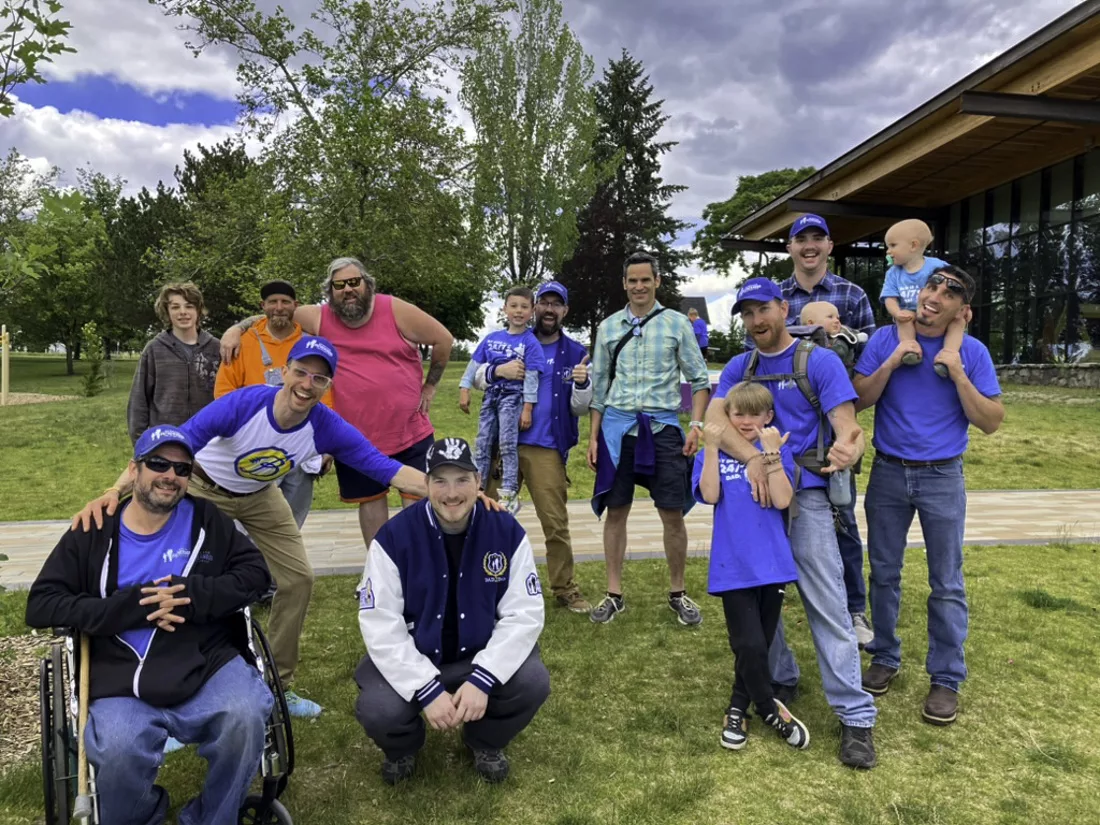
One thing that set the first Dads AF cohort apart was their instinct to give back. This time, community service is woven into the seven-week structure as a core practice, not an add-on. The research on this is clear: men who serve others regularly experience measurable improvements in mental health, sense of purpose, and even physical longevity.
Service opportunities are coordinated through the program and done together as a cohort. They include event support for SpoFI’s Father’s Day Celebration and graduation ceremonies, facility projects at SpoFI HQ, neighborhood and community service in partnership with local organizations, and outreach — because graduates who speak honestly about their experience are the most effective invitation another man can receive.
For SpoFI dads, this closes a meaningful loop: you received investment, now you reinvest. That’s what brotherhood looks like at its best.
The capstone: back on the river
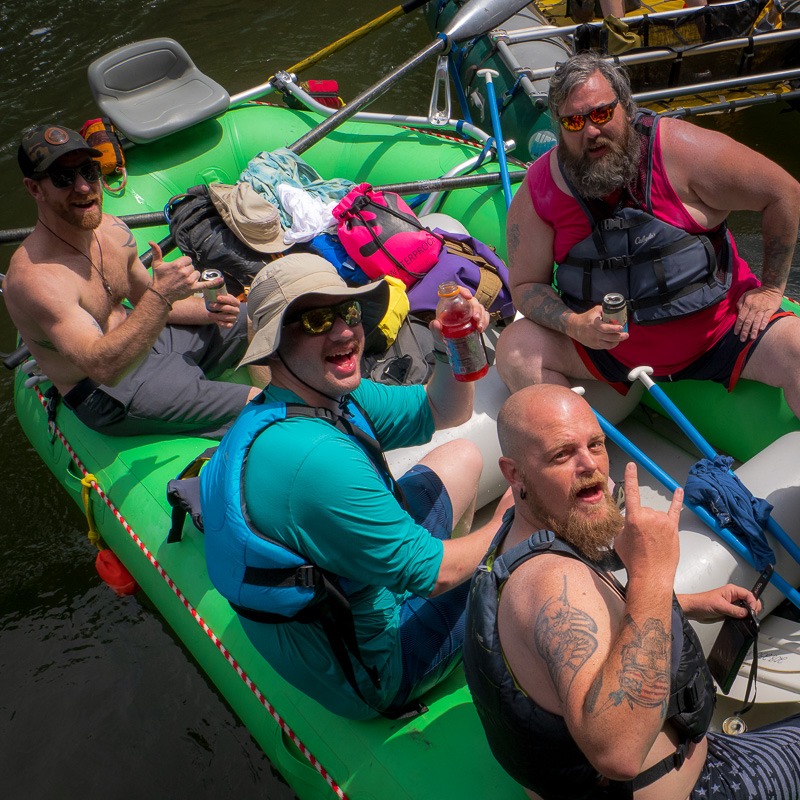
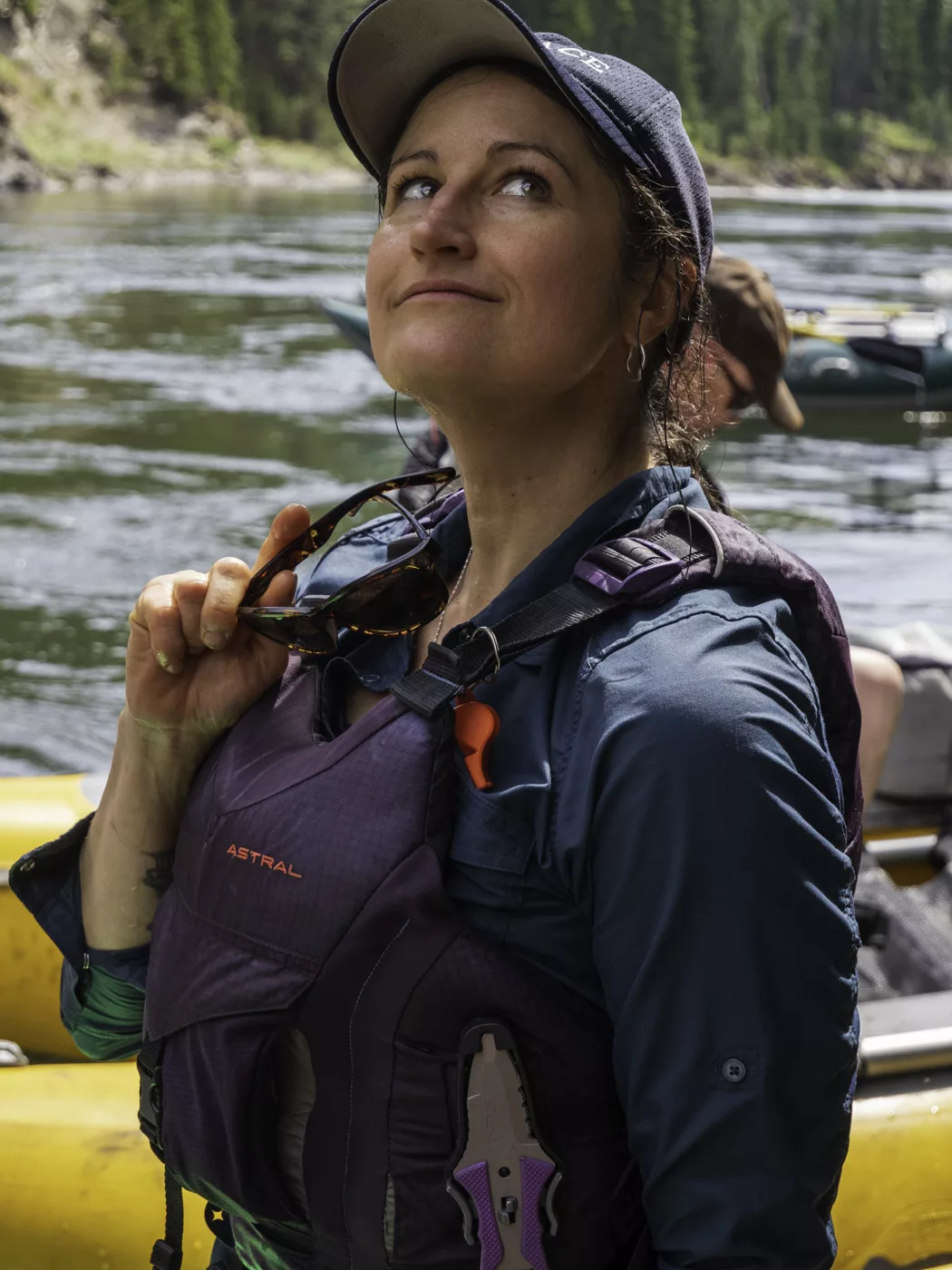
Seven weeks of showing up for yourself, your cohort, and your community builds toward one unforgettable day on the water. The Dads AF capstone rafting adventure returns: a moderately challenging whitewater trip on the Clark Fork River, led by a veteran guide who is a friend to SpoFI. Ask any man from the 2024 cohort what it felt like to hit those rapids with the guys they’d been grinding alongside for six weeks. It hits different when you’ve earned it together.
Dads AF (Dads About Fitness) is a SpoFI alumni program. Enrollment requires current or completed participation in SpoFI's Dad2Dad program. Learn more about the full program pathway at spofi.org/classes.
Frequently asked questions
What is Dads AF?
Dads AF (Dads About Fitness) is a SpoFI alumni program for men who have completed or are currently enrolled in Dad2Dad. It’s a seven-week small-cohort experience built around six pillars of human performance — purpose, physical health, habits, mental optimization, nutrition, and emotional wellbeing — with a whitewater rafting capstone on the Clark Fork River.
Who is eligible for Dads AF 2.0?
Any man currently enrolled in or who has completed SpoFI’s Dad2Dad program. That’s the only requirement. If you’re mid-program in Dad2Dad and wondering whether you’ll be ready, the answer is yes — the work you’re doing right now is exactly the foundation Dads AF builds on.
When does Dads AF 2.0 start?
Session 0 — the foundations and orientation night — meets Wednesday, March 18, 2026 at 6:00 PM at SpoFI’s office, 711 E 3rd Ave, Spokane, WA 99202. Weekly sessions continue every Wednesday through late April, with the Clark Fork River capstone to follow.
How long is the program?
Seven weekly sessions plus the capstone rafting trip. Each Wednesday session runs 90 to 120 minutes. The full program arc from Session 0 through the river runs approximately seven to eight weeks.
How much does Dads AF cost?
There is no cost to participate. Dads AF is a SpoFI alumni program provided at no charge to eligible Dad2Dad participants.
How many spots are available?
The cohort is intentionally small. The group dynamic is the engine of the program — it only works when everyone is invested. When seats fill, registration closes. If you’re eligible and interested, don’t wait.
What happens in Session 0?
Session 0 is foundations night. Before diving into the six content pillars, we take stock of where every man actually is: hydration, sleep, movement, and basic nutrition. Each man completes a simple self-assessment, makes one specific commitment for the week ahead, and gets a full walkthrough of the seven-week arc. It’s also when the cohort brotherhood begins.
What is the capstone?
The program closes with a whitewater rafting trip on the Clark Fork River, led by a veteran guide with deep ties to SpoFI. It’s a moderately challenging trip — not extreme, but it demands something from you. Men who’ve done it consistently describe it as the best possible way to close seven weeks of hard work together.
Do I need to be in good physical shape to participate?
No. Dads AF meets every man where he is. Week 2 establishes your personal baseline — the goal is to understand your numbers and build from there, not to arrive already fit. The program is designed for real dads with real schedules, not athletes.
What is the Strava component?
Dads AF uses Strava to support an optional community workout layer — Monday, Wednesday, and Friday morning sessions at 7:00 AM, plus weekend family-friendly activities. Participation isn’t mandatory, but the guys who show up for it consistently tend to get more out of the program.
Is community service really part of the curriculum?
Yes, and intentionally so. Research consistently shows that men who serve others regularly see measurable improvements in mental health, sense of purpose, and longevity. Service is coordinated through the program and done together as a cohort — not assigned as homework. For SpoFI dads specifically, it closes a meaningful loop: you received investment, now you reinvest.
What comes after Dads AF?
Graduates move into SpoFI’s long-term alumni community. Over time, men who demonstrate consistent follow-through and genuine investment in others’ growth are invited into a mentorship pathway — eventually walking alongside the next man coming up behind them. That’s how presence changes everything, one generation at a time.
Leave a Reply